
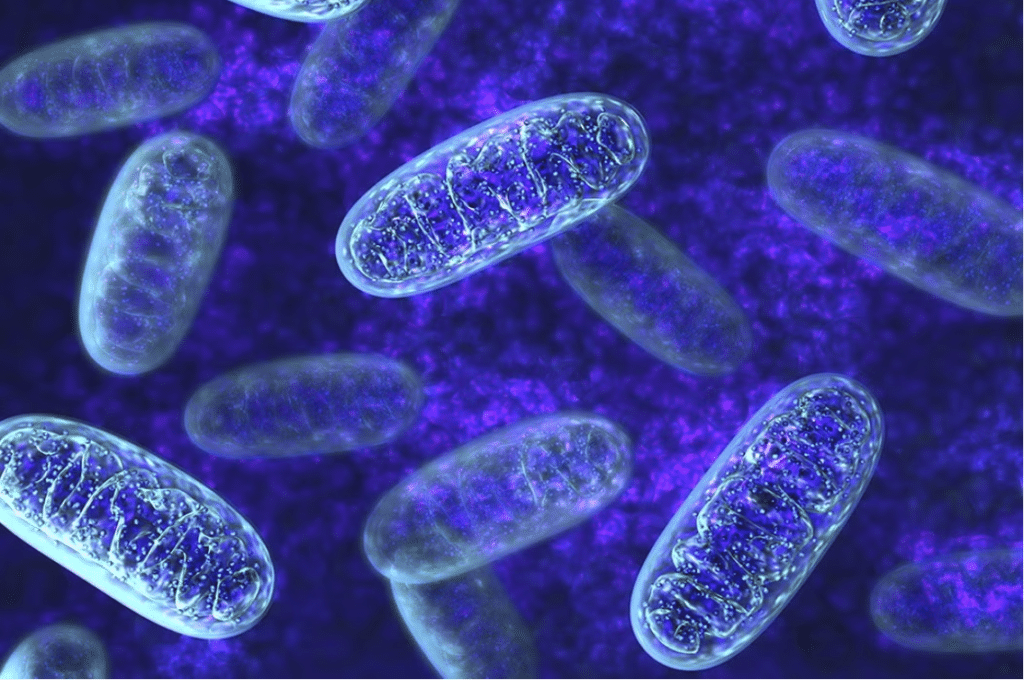
Mitochondria are often described as the cell’s “powerhouses,” but current research shows they are also key regulators of inflammation, cell death, stem cell function, and metabolic signaling that influence the aging process. As mitochondrial quality declines, we see reduced ATP production, increased reactive oxygen species (ROS), accumulation of mitochondrial DNA (mtDNA) mutations, and impaired cellular repair—hallmarks strongly linked to age‑related disease and functional decline.
Q: How exactly do mitochondria influence the aging process?
A: Multiple large reviews now position mitochondrial dysfunction as a central determinant of aging: it drives chronic inflammation, promotes cellular senescence, disrupts stem cell renewal, and contributes to tissue degeneration across the brain, muscle, cardiovascular system, and metabolic organs. When mitochondrial quality control (biogenesis, dynamics, and mitophagy) fails, damaged organelles accumulate and accelerate systemic aging pathways.
The Mitochondrial Theory Of Aging: What Has Changed?
The classic mitochondrial free radical theory proposed that cumulative ROS‑induced mtDNA damage inexorably drives aging. However, more recent data challenge a simple linear “more ROS = faster aging” model and instead highlight mitochondrial ROS as context‑dependent signaling molecules that can either damage or beneficially stress cells.
Q: Is oxidative stress still relevant to longevity?
A: Yes, but the nuance is that low, transient mitochondrial ROS pulses can trigger adaptive stress responses, while chronic, uncontrolled oxidative stress is deleterious. This concept underpins “mitohormesis,” where mild mitochondrial stress (through exercise, caloric restriction, or hypoxia) activates protective pathways that ultimately improve resilience and healthspan.
Latest Research: How Mitochondria Shape Healthspan
Recent reviews and experimental studies reinforce that mitochondrial function is tightly linked to healthspan, not just raw lifespan. In both animal models and human observational data, impaired mitochondrial quality correlates with sarcopenia, neurodegeneration, insulin resistance, cardiovascular disease, and overall frailty.
Q: What are the key mitochondrial changes that influence aging?
A: Across species, aging mitochondria consistently show: disorganized ultrastructure, reduced oxidative phosphorylation capacity, decreased ATP output, higher ROS generation, mtDNA mutations, impaired mitophagy, and increased mitochondria‑mediated apoptosis. These changes weaken energy‑hungry tissues such as skeletal muscle and brain, contributing to fatigue, weakness, and cognitive decline.
Q: Does improving mitochondrial function actually extend life?
A: In multiple model organisms, both suppressing and enhancing certain mitochondrial functions can extend lifespan, suggesting that fine‑tuned control—not simply “more mitochondria”—is what matters. Interventions that improve mitochondrial quality control and energy efficiency consistently improve healthspan and sometimes modestly increase lifespan in animals.
Breakthrough Findings: Mitochondrial Proteins And Longevity
A major recent focus is on mitochondrial proteins that organize the respiratory chain into “supercomplexes” to improve energy efficiency. One such protein, COX7RP, has become a promising longevity target.[2]
Q: What is COX7RP and why is it important?
A: COX7RP is a mitochondrial protein that promotes assembly of respiratory supercomplexes, improving electron transport efficiency and ATP production. A 2025 mouse study showed that transgenic overexpression of COX7RP enhanced mitochondrial performance, improved metabolic health, and extended average lifespan by about 6.6% compared with wild‑type animals, alongside better muscle function and healthier adipose tissue.
Leveraging Mitochondrial Stress: Mitohormesis in Healthy Aging
An important theme in current longevity science is that mild mitochondrial stress, if well controlled, may be beneficial. This “leveraging mitochondrial stress” approach aims to trigger adaptive pathways such as antioxidant defenses, mitochondrial biogenesis, and improved proteostasis.
Q: What is mitohormesis in practical terms?
A: Mitohormesis describes the phenomenon where low‑level mitochondrial stress—through exercise, intermittent hypoxia, caloric restriction, or specific pharmacological agents—induces a systemic adaptive response that enhances cellular resilience and prolongs healthspan. Studies in *C. elegans* and *Drosophila* demonstrate that mild mitochondrial perturbation can actually extend lifespan, rather than shorten it.
Clinically Relevant Interventions To Support Mitochondrial Longevity
While gene‑level interventions are still experimental, several accessible strategies show consistent benefits for mitochondrial health and are now cornerstones of evidence‑informed longevity practice.
Q: Which lifestyle interventions have the strongest evidence?
A: Three pillars are particularly well supported:
– Regular exercise: Both aerobic and resistance training maintain mitochondrial density, preserve oxidative capacity, and mitigate age‑related declines in mtDNA and mitochondrial enzymes. Chronic exercise also preserves expression of mitochondrial sirtuins such as SIRT3, which are linked to longevity pathways.
– Nutritional strategies: Caloric restriction and related dietary patterns, when nutritionally adequate, improve mitochondrial efficiency and extend lifespan in numerous animal models, partly via enhanced mitochondrial biogenesis and reduced oxidative damage
– Metabolic health optimization: Maintaining insulin sensitivity and avoiding chronic overnutrition reduces mitochondrial overload and ROS production, lowering risk for metabolic disease and supporting healthier aging trajectories.
Q: What about supplements like NAD⁺ boosters?
A: In animal studies, NAD⁺ precursors such as nicotinamide riboside (NR) and nicotinamide mononucleotide (NMN) have been shown to improve mitochondrial function and, in some cases, extend lifespan or healthspan. Human trials show promising improvements in some metabolic and mitochondrial markers, but long‑term mortality or hard aging outcomes remain unproven, so these are best viewed as adjuncts to foundational lifestyle strategies
Emerging And Future Therapies Targeting Mitochondria
The latest reviews emphasize mitochondria as attractive therapeutic targets across oncology, metabolic disease, neurodegeneration, and systemic aging. A range of emerging strategies is under active investigation.
Q: What cutting‑edge mitochondrial longevity interventions are on the horizon?
A: Several directions stand out:
– Mitochondria‑targeted antioxidants and peptides designed to accumulate within the organelle and mitigate oxidative damage without blocking beneficial ROS signaling.
– Small molecules that enhance mitophagy and mitochondrial biogenesis, aiming to rejuvenate the mitochondrial network and restore more youthful metabolic profiles.
– Mitochondria‑directed gene therapies and protein modulators (such as COX7RP‑targeting approaches) that increase energy efficiency and reduce aging‑associated mitochondrial decline.
Q: Can mitochondria actually be used as a “rejuvenation tool”?
A: A 2024 review describes mitochondria as a promising rejuvenation axis, highlighting that interventions which restore mitochondrial quality—through pharmacology, gene modulation, or organelle replacement concepts—may help reverse features of cellular aging. However, most of these approaches are in preclinical or early clinical phases, so rigorous human trials will be essential before broad clinical adoption.
Practical Takeaways For Longevity‑Focused Individuals
Even as advanced mitochondrial therapeutics develop, the most evidence‑based levers available now are lifestyle and metabolic interventions that protect mitochondria over decades. For clinicians and health‑conscious individuals, building protocols around these fundamentals offers the most reliable path to improved healthspan.
Q: What are the top, evidence‑aligned steps someone can take today?
A: Based on current literature, priorities include:
- Establishing consistent aerobic and resistance training to preserve mitochondrial capacity and muscle mass.
- Adopting a nutrient‑dense diet that avoids chronic caloric excess, refined sugars, and persistent hyperinsulinemia, while potentially integrating mild caloric restriction or time‑restricted eating where appropriate.
- Supporting sleep, circadian rhythm alignment, and stress management, which modulate mitochondrial function and inflammatory tone.
- Considering targeted nutraceuticals (e.g., NAD⁺ precursors, certain mitochondrial cofactors) under clinician guidance as adjuncts, not substitutes, for foundational behaviors.
- Intermittent Hypoxic-Hyperoxic Therapy triggers a cellular renewal through mitochondrial biogenesis & autophagy. The hypoxic stimulus signals the body to produce new, healthy mitochondria (biogenesis) while simultaneously clearing out old, inefficient ones (a process called mitophagy). This “spring cleaning” results in a younger, more robust mitochondrial network.
- Hydrogen Therapy protects and optimizes mitochondria by neutralizing highly toxic free radicals while preserving beneficial signaling molecules. It boosts cellular energy by increasing ATP production, improves mitochondrial respiration, and activates the Nrf2 pathway to trigger the body’s natural antioxidant defenses
Begin Your Longevity Journey
Whether you’re seeking more energy, hormonal balance, or better sleep during the peri or postmenopausal period, our team at Restore Longevity is here to guide you.
Book your personalised consultation today and discover what’s possible when your care is built around you.
This article is for educational purposes only and is not a substitute for professional medical advice. Always talk to a qualified healthcare provider about diagnosis and treatment.
Sources
[1] The Mitochondrial Basis of Aging – PMC – NIHhttps://pmc.ncbi.nlm.nih.gov/articles/PMC4779179/
[2] Mitochondria in oxidative stress, inflammation and aging: from mechanisms to therapeutic advanceshttps://www.nature.com/articles/s41392-025-02253-4
[3] Mitochondrial Aging and Age-Related Dysfunction of … – PMChttps://pmc.ncbi.nlm.nih.gov/articles/PMC4003832/
[4] Mitochondria and aging – PubMedhttps://pubmed.ncbi.nlm.nih.gov/22399429/
[5] The role of mitochondria in longevity and healthspan – PMC – NIHhttps://pmc.ncbi.nlm.nih.gov/articles/PMC4030464/
[6] Leveraging mitochondrial stress to improve healthy aging – PMC – NIHhttps://pmc.ncbi.nlm.nih.gov/articles/PMC12869046/
[7] Gene Therapies For…https://longevityreview.com/2025/05/02/longevity-reviewed-how-to-optimize-your-aging-mitochondria/
[8] A mitochondrial protein may hold the secret to longevity, new study …https://www.eurekalert.org/news-releases/1109082
[9] Scientists found a new way to slow aging inside cells | ScienceDailyhttps://www.sciencedaily.com/releases/2025/12/251218060557.htm
[10] Mitochondrial Longevity Pathways – PMC – NIHhttps://pmc.ncbi.nlm.nih.gov/articles/PMC3071741/
[11] Mitochondria & Longevity | Insights & Approaches | MAYRLIFEhttps://www.mayrlife.com/en/magazine/mitochondria-and-longevity
[12] Mitochondria: A Potential Rejuvenation Tool against Aginghttps://www.aginganddisease.org/EN/10.14336/AD.2023.0712
[13] Is Mitochondria the Key to Longevity? Some Experts Think So.https://news.northeastern.edu/2026/03/02/mitochondria-health-wellness-longevity/
[14] Boosting One Mitochondrial Protein Increases Lifespan And Slows Aging in Micehttps://www.sciencealert.com/boosting-one-mitochondrial-protein-increases-lifespan-and-slows-aging-in-mice
[15] Why Cellular Longevity Depends on Mitochondria Science, Not …https://ubiehealth.com/doctors-note/colon-hydrotherapy-metabolic-optimization-mito-x4253q1